


The Best Ketone Test Blood Glucose Test Strips, when used together with the TD-4279 β-Ketone & Blood Glucose Monitoring System to quantitatively measure glucose (sugar) in fresh capillary whole blood from the finger.
Your blood glucose readings deliver plasma equivalent results and are displayed either in millimoles of glucose per liter of blood (mmol/L) or in milligrams of glucose per deciliter of blood (mg/dL). The measurement range of this meter is 10 to 700 mg/dL (0.5 to 38.9 mmol/L).
Sample Size: 1.0 μL
Reaction Time: 5 seconds
System Measurement Range: 10 to 700 mg/dL (0.6 to 38.9 mmol/L)
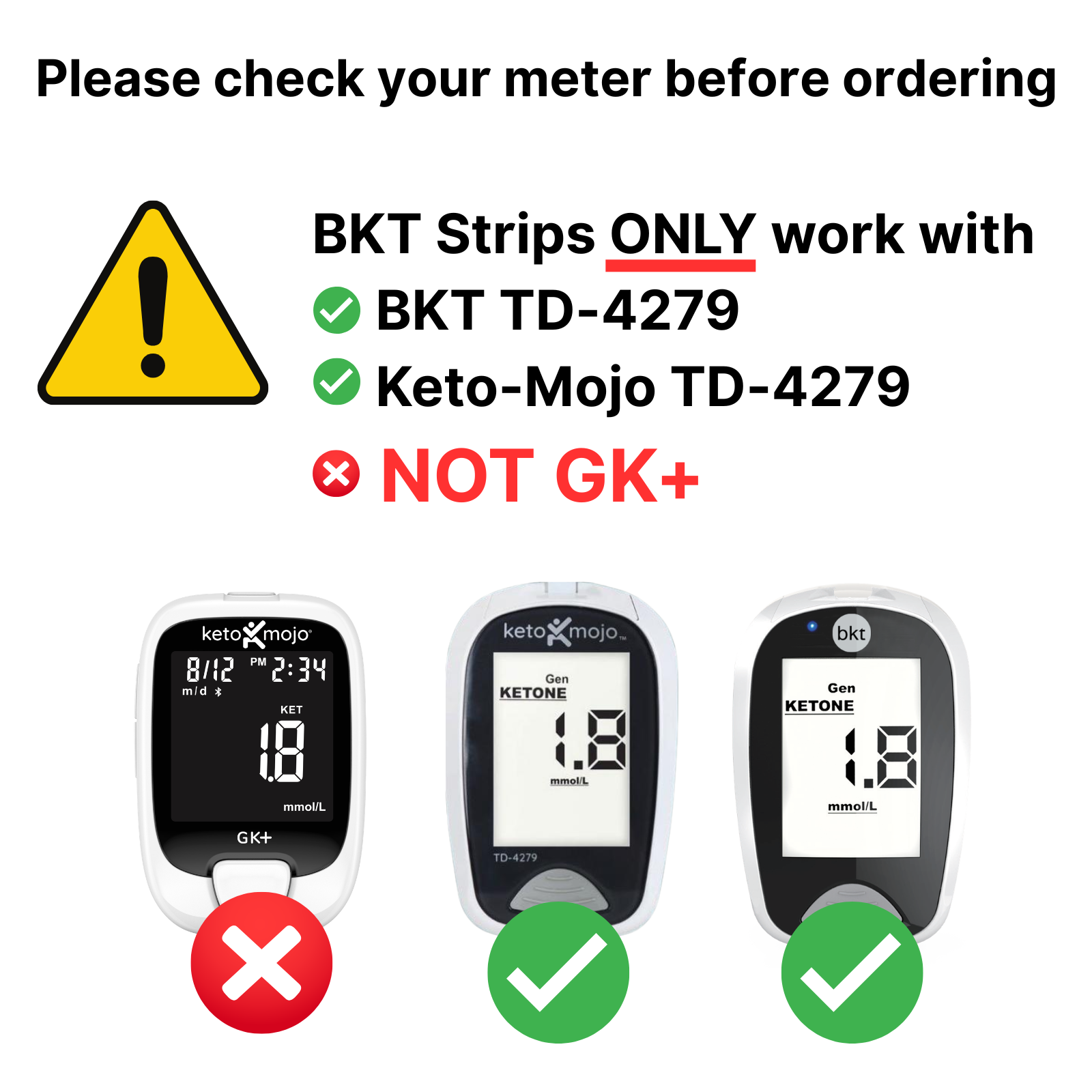
** COMPATIBLE WITH U-Right, iCARE, SUGARCHEK, and ketomojo TD-4279 METERS.
How do I tell if I have a TD-4279 meter?
Your meter will look like the image below, and usually say TD-4279 on the front or back of the meter.

We accept HSA/FSA cards.
International Shipping Available.
WHAT TESTING REVEALS:
Hidden carbs in "safe" foods. Which meals spike blood sugar and which don't. How your body responds differently than someone else's. Real data to fine-tune your diet - because no generic advice can replace what testing shows about your individual response.
WHAT IS BLOOD GLUCOSE?
Blood glucose (blood sugar) is the body's primary source of energy. It comes from the foods we eat - particularly carbohydrates - and is regulated by insulin. When glucose levels stay within a healthy range, the body functions well. When levels run too high or too low, it can affect energy, mood, and overall health.
GLUCOSE AS A METABOLIC MARKER:
Blood glucose is one of the most widely used indicators of metabolic function. How the body handles glucose - how quickly it rises after eating, how high it goes, and how fast it returns to baseline - provides insight into overall metabolic health. Many healthcare providers use fasting glucose and post-meal glucose responses as part of routine health assessments. Regular testing at home can provide useful data to share with a care team.
REASONS PEOPLE TEST:
Monitoring as Part of a Diabetes Program
Regular monitoring of blood glucose levels can help you and your doctor gain better control of your diabetes. Testing throughout the day shows how food, activity, stress, and other factors affect blood sugar. This system is intended as an aid to monitoring the effectiveness of a diabetes control program.
Following a Ketogenic or Low-Carb Diet
Glucose testing shows how specific foods affect blood sugar - even foods that seem "safe." Testing before and after meals reveals which choices keep levels stable and which cause spikes. For those tracking their Glucose Ketone Index (GKI), glucose readings are essential for calculating the ratio.
Finding Hidden Carbs
Not all carbs are obvious. Sauces, dressings, "sugar-free" products, and restaurant meals often contain hidden sugars and starches that don't show up clearly on labels. Testing before and after eating is the only way to know for sure. Many people are surprised to discover that foods they thought were safe cause significant glucose spikes.
Optimizing Diet and Nutrition
The same food can affect two people completely differently. A meal that keeps one person's glucose steady might cause a spike in someone else. There's no way to know without testing. Many people use glucose testing to fine-tune their eating habits - discovering which foods work for their body and which ones don't.
WHEN TO TEST:
First thing in the morning (fasting) - for a baseline reading. Before meals - to see starting levels. 2 hours after meals - to see how food choices affected glucose. Before and after exercise - to understand how activity impacts levels. When something feels off - to get a clear answer.
WHAT THE NUMBERS MEAN:
Normal plasma glucose ranges*:
Fasting and before meal: Less than 100 mg/dL (5.6 mmol/L)
2 hours after meals: Less than 140 mg/dL (7.8 mmol/L)
*American Diabetes Association, Standards of Medical Care in Diabetes, Volume 41, Supplement 1, January 2018
Please consult your doctor to determine a target range that works best for you.
Questions? Our U.S.-based support team is here to help.
Everything you need to know

Your cart is empty
Let's fix that


You might also like
 Glucose Focus Kit
$49.99
Glucose Focus Kit
$49.99
 Glucose Test Strips
50 Strips
$24.99
Glucose Test Strips
50 Strips
$24.99
 Ketone Test Strips
50 Strips
$49.99
Ketone Test Strips
50 Strips
$49.99


